
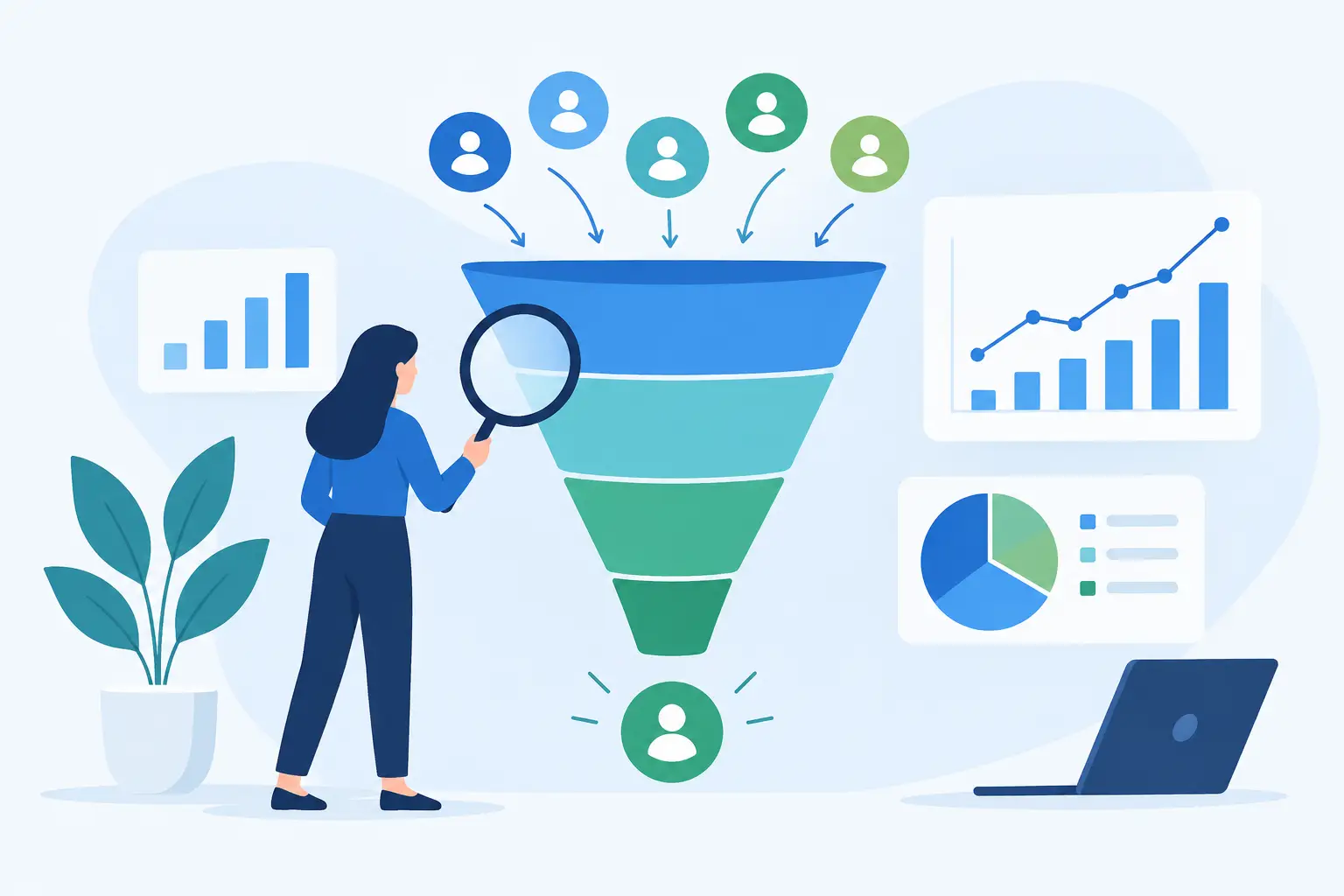
A campaign can look busy and still leave revenue on the table. Traffic is coming in, social posts are moving, ads are getting clicks, and the sales team is asking why qualified leads feel scarce. Knowing how to audit marketing funnel performance helps you locate the gap between activity and action – then fix it with purpose instead of piling on more tactics.
A useful funnel audit is not a spreadsheet exercise for its own sake. It is a clear-eyed look at how people move from first impression to lasting customer relationship. For marketing leaders, that means bringing brand, creative, media, website experience, sales follow-up, and reporting into the same conversation.
Start with the customer journey, not the channel report
Most organizations have channel data. They can see website sessions, email opens, form fills, and ad results. The harder question is whether those numbers tell a connected story about the customer.
Before opening a dashboard, define the journey your best prospects actually take. A regional bank may need to build trust over several interactions before someone opens an account. A healthcare provider may need to make an anxious patient feel informed and confident before they schedule. An event-driven destination brand may be working with a much shorter window, where inspiration needs to turn into a booked stay or ticket purchase quickly.
Map the major stages in plain language. Awareness is when the right audience first notices you. Consideration is when they investigate whether you are credible and relevant. Conversion is when they take the action that matters: request a consultation, apply, buy, book, donate, or schedule. Retention and advocacy come after the first conversion, when experience determines whether the relationship grows.
Do not force every prospect into a tidy, linear path. People often jump between search, social, referrals, email, and direct website visits. The point is not to make the journey look neat. The point is to identify the moments where confidence rises, stalls, or disappears.
How to audit marketing funnel metrics that matter
A funnel audit gets stronger when every stage has a clear business purpose and a small set of meaningful measures. Too many teams report everything because they have access to everything. That creates noise, not insight.
At the awareness stage, look beyond raw reach. Are you reaching the audiences that can realistically become customers? Review qualified traffic by source, branded versus non-branded search activity, video engagement quality, and the share of visitors in your service area or priority markets. A high volume of irrelevant traffic is not a win.
During consideration, examine whether your marketing earns the next step. Time on key service pages, returning visitor rate, case study engagement, email click-throughs, pricing-page visits, and content downloads can all help. None of these metrics proves intent alone. Together, they show whether people are moving closer or merely passing through.
At conversion, get specific. Track form completion rate, phone calls, booked meetings, online purchases, application starts and completions, cost per qualified lead, and lead-to-sale rate. If possible, connect campaign source to closed revenue rather than stopping at the lead form. A cheap lead that never becomes a customer is rarely a bargain.
For retention, review repeat purchases, renewal rates, review volume and sentiment, referral activity, customer email engagement, and account growth. This stage is especially valuable for organizations that depend on trust and long-term relationships. Your best marketing may be the experience customers talk about after the campaign ends.
Find the handoffs where momentum breaks
The biggest problems are often not inside one channel. They show up at the handoffs between teams and systems.
A paid social campaign might drive strong traffic to a landing page that loads slowly on mobile. A strong website form may create leads that sit untouched in a shared inbox. A sales team may follow up promptly but receive inquiries with too little information to prioritize. Or the brand promise in the ad may feel energetic and distinct, while the landing page sounds generic and cautious.
Audit these handoffs by walking the path yourself. Click the ad. Search for the business on a phone. Fill out the form. Call the main number. Read the confirmation email. Ask sales or customer service what happens next. This simple exercise can expose friction that no dashboard will surface.
Then compare marketing and sales definitions. What counts as a lead? What makes one qualified? How quickly should a new inquiry receive a response? Which outcomes should be recorded in the CRM? If the answers vary by person, the funnel is not being managed as one system.
Pair the numbers with real customer evidence
Data tells you where to look. Customer evidence helps explain why people behave the way they do.
Review call recordings, chat transcripts, sales notes, survey responses, online reviews, customer-service questions, and search terms. Look for repeated language. If prospects repeatedly ask about insurance coverage, turnaround time, fees, eligibility, or location, that is not just a sales objection. It is a content and messaging opportunity.
This is where brand strategy does real work. Strong creative is not decoration placed on top of performance marketing. The right message can reduce uncertainty before someone ever fills out a form. Clear positioning can make a campaign more memorable. A confident, human voice can turn a clinical process into a more approachable one.
There is a trade-off here. Some organizations need more data before making changes; others are stuck in analysis because the evidence is already clear. If 70 percent of mobile visitors abandon a key form and the form asks for twelve fields, you do not need six more months of research to test a shorter version.
Audit the experience stage by stage
Once you have found the likely friction points, review the experience at each stage with a practical lens.
At awareness, ask whether the creative earns attention quickly and makes the brand recognizable. Does it communicate a relevant benefit, or could it belong to any competitor? Campaigns do not need to explain everything at once. They need to give the right audience a compelling reason to care.
At consideration, ask whether your website and content answer the next obvious questions. Can visitors understand what you do, who it is for, and why they should trust you within a few seconds? Can they find proof through testimonials, results, credentials, case studies, or clear examples of the work?
At conversion, remove unnecessary decisions. A call to action should match the buyer’s readiness. Asking a first-time visitor to commit to a major purchase may be too much. Offering a consultation, appointment, estimate, guide, or event registration can be a better next move, depending on the category.
After conversion, make sure the follow-up feels like a continuation of the same brand experience. A polished campaign loses energy when the confirmation message is vague, delayed, or overly automated. The handoff should tell people what happens next, when it will happen, and who is responsible.
Turn findings into a focused action plan
An audit should end with decisions, not a document that gathers digital dust. Prioritize issues based on impact, effort, and confidence.
Start with the changes most likely to improve a meaningful outcome: repairing broken tracking, clarifying a muddled value proposition, tightening an underperforming landing page, reducing form friction, or improving lead-response time. Then identify larger strategic projects, such as rebuilding a fragmented website journey, redefining audiences, or creating a stronger campaign platform.
Give every priority an owner, a deadline, and a success measure. If the goal is better lead quality, define how quality will be judged. If the goal is more booked appointments, establish the baseline and decide how long the test needs to run. Marketing performance improves when teams can see the connection between a change, a measurement, and a business outcome.
A good cadence is usually a monthly performance review with a deeper quarterly funnel audit. Fast-moving campaigns may need weekly checks, but resist the urge to redesign the strategy every time a daily metric dips. Look for patterns, not panic.
The most valuable funnel audit leaves your team with a sharper story: who you need to reach, what they need to hear, where they hesitate, and what your organization can do next to move them forward. That clarity gives creative work more punch, gives media dollars more direction, and gives every customer interaction a better chance to matter.