
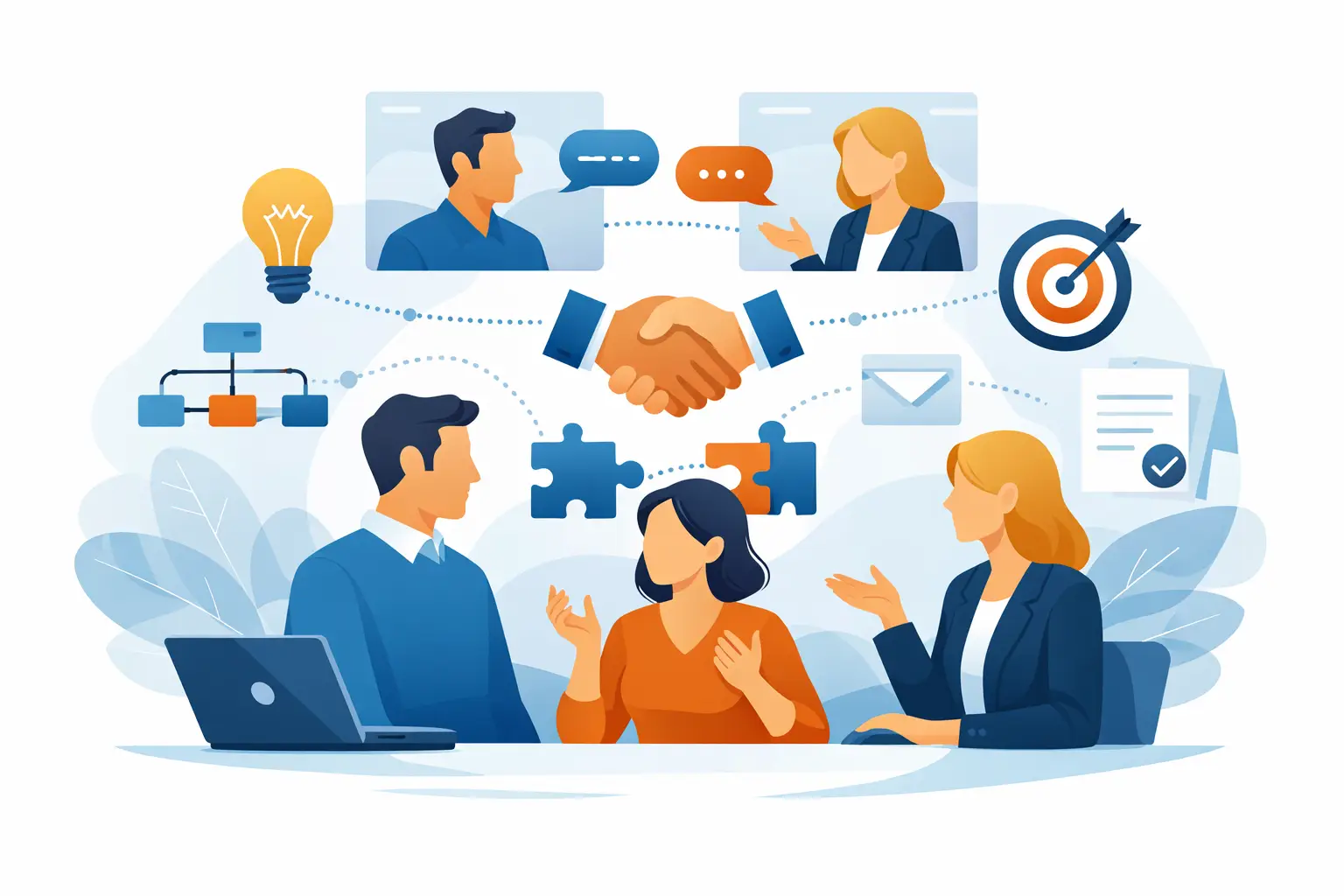
A lot of marketing problems are not really marketing problems. They are alignment problems. The campaign stalls, the website misses the mark, the brand message feels watered down – and somewhere underneath it all is a gap in expectations, communication, or trust. That is why understanding client collaboration meaning matters so much, especially for businesses hiring an agency to help shape growth.
At its core, client collaboration means working with a partner in a way that combines strategic thinking, shared input, clear communication, and mutual accountability. It is not the client handing over a project and disappearing. It is not the agency running off with a vague brief and hoping for applause. Real collaboration is built together, with both sides contributing what they know best.
What client collaboration meaning really looks like
The simplest way to define it is this: client collaboration is an active working relationship where ideas, feedback, goals, and decisions move in both directions. The client brings business knowledge, internal perspective, and decision-making clarity. The agency or service partner brings strategy, creative direction, execution, and outside-market insight.
That sounds straightforward, but in practice, collaboration is more than sharing opinions on a draft. It shows up in how goals are set, how feedback is given, how quickly decisions are made, and how honest both sides are when something is not working.
A collaborative relationship has a certain energy to it. There is momentum. Questions get answered. Context gets shared early. Challenges are discussed before they become expensive. Instead of treating the agency like an order taker, the client treats them like a thinking partner. And instead of hiding behind process, the agency helps lead with clarity.
That is the difference between a transactional engagement and a productive one.
Why client collaboration meaning matters in marketing
Marketing is not built in a vacuum. Brand positioning, campaign messaging, visual identity, digital strategy, and content performance all depend on context. If your agency does not understand your sales cycle, your internal politics, your audience behavior, or your regional market reality, the work may look polished and still miss the target.
Strong collaboration closes that gap.
It helps agencies create work that sounds like your brand instead of generic category noise. It helps business leaders make faster, smarter decisions because the strategy is rooted in real priorities. It also reduces the common friction points that slow projects down – endless revision rounds, unclear approvals, conflicting stakeholder opinions, and goals that shift halfway through execution.
For marketing directors and business leaders, this matters for another reason: accountability. A collaborative agency relationship does not remove responsibility from either side. It sharpens it. Everyone knows what success looks like, who owns what, and how progress will be measured.
That kind of clarity is powerful.
Collaboration is not the same as constant input
This is where the idea can get blurry.
Some teams hear the word collaboration and assume it means everyone gets a say on everything, all the time. In reality, that usually creates noise, not better work. Too many voices without structure can flatten bold ideas, slow down timelines, and produce safe creative that pleases no one.
Healthy collaboration has shape. It includes the right people at the right moments. It gives space for agency expertise while keeping the client closely connected to strategy and outcomes. It welcomes feedback, but it also respects the process.
In other words, collaboration is not crowd-sourced decision-making. It is coordinated partnership.
The building blocks of a collaborative client relationship
Trust comes first. If the client does not trust the agency’s expertise, every recommendation turns into a debate. If the agency does not trust the client to share honest information, strategy gets built on half the picture. Good collaboration starts when both sides are transparent about goals, constraints, expectations, and concerns.
Communication is the next layer. Not more communication for the sake of it, but useful communication. The best partnerships have regular touchpoints, clear points of contact, and direct conversations when priorities shift. They do not wait until a deadline is in danger to surface a problem.
Shared goals matter just as much. Collaboration gets weak when one side is chasing brand lift and the other side is focused on lead volume, or when the client wants speed but the approval process is built for caution. Alignment on success metrics keeps everyone moving in the same direction.
Then there is responsiveness. Great ideas can lose steam when decisions drag. A collaborative client does not need to reply in five minutes, but they do need to stay engaged enough to keep the work moving. The same goes for the agency. Responsiveness signals commitment.
What good collaboration looks like day to day
In a strong agency-client partnership, collaboration is practical. It shows up in kickoff meetings with real substance, not surface-level goals. It shows up when clients share internal data, customer insights, and stakeholder concerns early, even if the information is messy. It shows up when agencies ask sharper questions instead of rushing to present polished answers.
It also shows up in feedback.
Useful feedback is specific, tied to business objectives, and delivered by the right stakeholders. Vague comments like make it pop or we will know it when we see it usually send teams in circles. Better feedback explains what feels off and why. Maybe the message sounds too corporate for the audience. Maybe the design does not reflect the brand’s level of confidence. Maybe the call to action does not match the buyer journey.
That kind of feedback moves the work forward.
Good collaboration also means both sides can handle tension without damaging the relationship. Not every smart recommendation will be easy to hear. Not every client request will be strategically perfect. The point is not to avoid friction altogether. The point is to work through it productively.
Where collaboration often breaks down
Most collaboration problems are predictable.
Sometimes the client is too hands-off. They hire an agency, provide minimal context, disappear for two weeks, then return with major objections. Other times the client is too involved in the wrong ways, micromanaging execution instead of helping clarify business goals.
Agencies can create problems too. Overcomplicated processes, unclear timelines, weak onboarding, or a failure to explain strategic choices can make clients feel shut out. Creative confidence is valuable, but if it turns into defensiveness, collaboration erodes fast.
There is also the challenge of multiple stakeholders. A healthcare organization, bank, tourism group, or growing regional brand may have several voices in the room, each with different priorities. Collaboration gets harder when no one has final authority or when feedback is collected too late.
That does not mean collaborative work is unrealistic. It means the relationship needs structure.
How to improve collaboration without slowing the work
Start with a better brief. A strong brief should cover business goals, audience priorities, market realities, brand tone, project constraints, and what success actually means. If that foundation is thin, the project will likely wobble later.
Next, define roles early. Who gives feedback? Who approves? Who owns internal coordination? Who is responsible for timelines on each side? This sounds basic, but it saves a lot of frustration.
It also helps to agree on decision-making rules. If every revision goes back through ten people, momentum disappears. A tighter review process protects quality and speed.
Then give the partnership enough honesty to work. If sales are soft, if leadership is divided, if the internal team hates the current brand direction, say so early. Agencies do better work when they are working with reality, not a cleaned-up version of it.
That is one reason collaborative agencies tend to produce stronger long-term results. They are not just filling requests. They are helping shape smarter ones.
For businesses looking for that kind of relationship, Portside Advertising is built around exactly this mindset – strategic, creative, and hands-on enough to move from idea to execution with clients, not around them.
Client collaboration meaning in a results-driven partnership
If you strip away the buzzwords, client collaboration meaning comes down to this: better work happens when the relationship is active, honest, and shared. Not equal in expertise, because each side brings different strengths, but equal in commitment.
That is especially true in branding and marketing, where the strongest outcomes rarely come from a one-sided process. They come from sharp strategy, open communication, mutual trust, and a willingness to build something together.
When collaboration is working, you can feel it. The brand gets clearer. The work gets stronger. Decisions get faster. And instead of managing a vendor, you are building with a partner who is fully in the room with you.
That is where the momentum starts.