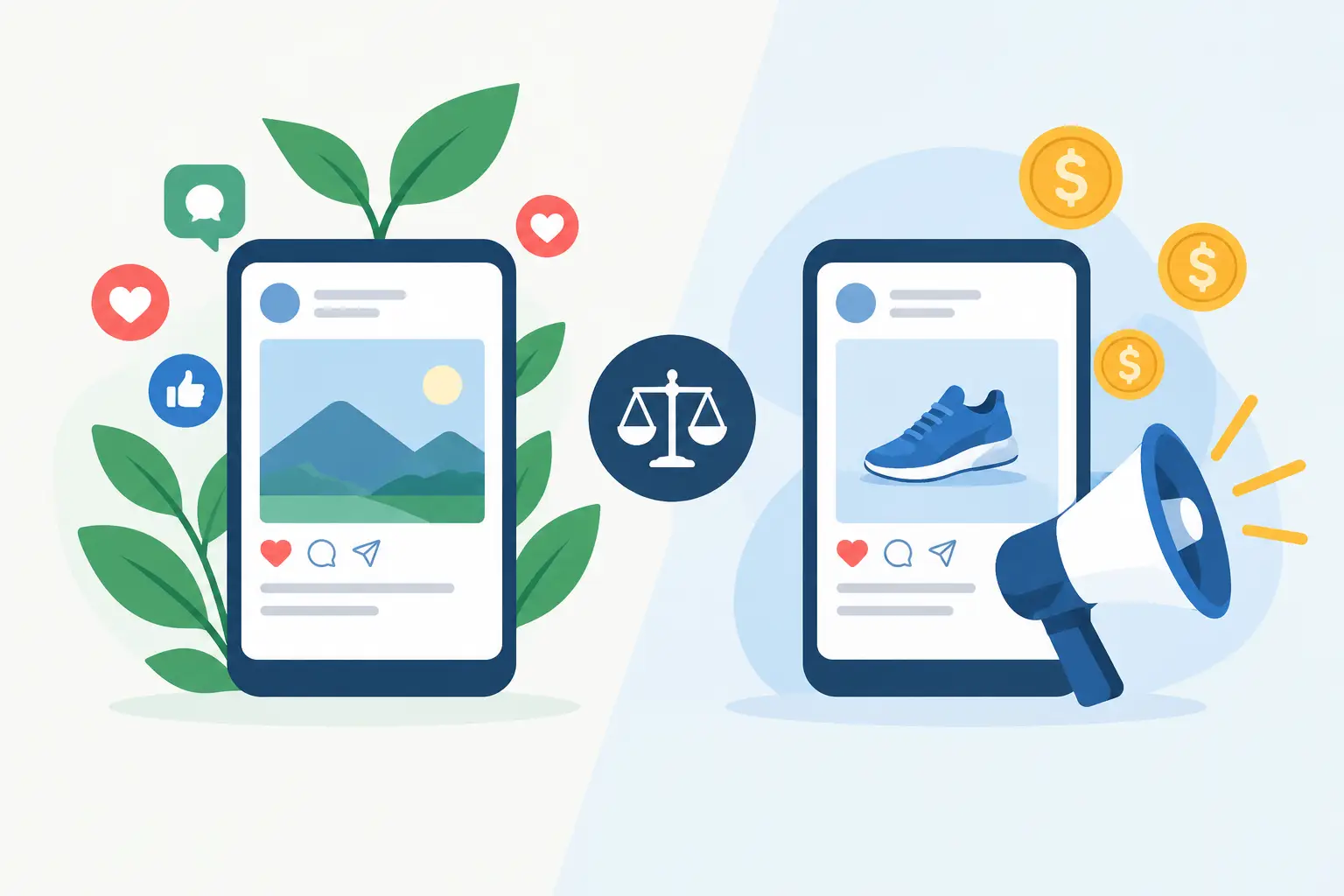
A strong social presence should not depend on crossing your fingers and hoping the algorithm feels generous. For brands with real growth goals, the organic social vs paid social conversation is not about picking a winner. It is about assigning each channel a clear job, then making them work together.
Organic content earns attention over time. Paid content creates momentum on demand. One builds familiarity and trust; the other puts the right message in front of more of the right people. When they are planned separately, social can become noisy, inconsistent, and hard to measure. When they are built from the same strategy, it becomes a powerful engine for connection and conversion.
Organic social vs paid social: the real difference
Organic social is the content a brand publishes without paying to distribute it. Think behind-the-scenes videos, employee spotlights, customer stories, timely community posts, educational carousels, and the everyday personality that gives a business its voice. Its biggest value is not instant scale. It is proof that your brand is active, credible, and worth paying attention to.
Paid social is advertising distributed through platforms such as Facebook, Instagram, LinkedIn, TikTok, and others. It lets a business reach audiences based on location, demographics, interests, behaviors, job titles, customer lists, or prior interactions with the brand. It can support awareness, lead generation, website traffic, event attendance, recruiting, sales, and remarketing.
The distinction matters because the expectations should be different. Organic posts are not failures because they do not reach every potential customer. Paid campaigns are not automatically strategic because they generate impressions. Each needs a purpose, a strong creative idea, and metrics that match the job at hand.
For a regional healthcare organization, organic content may reinforce expertise and compassion through provider stories and practical wellness information. Paid social can then promote a new service line to people in a specific market, while retargeting website visitors who have shown clear interest. For a bank, organic content might spotlight community involvement and financial education, while paid campaigns drive applications or awareness for a new branch opening.
What organic social does best
Organic social gives people a reason to believe the polished campaign. It is where a brand demonstrates its character in real time, responds to what matters in its community, and creates the steady rhythm that paid media alone cannot produce.
That rhythm is particularly valuable for organizations that operate on trust. Community institutions, financial brands, healthcare providers, destination organizations, and business-to-business companies often have longer consideration cycles. A prospective customer may not act after one ad, but they will notice whether the organization consistently shows up with useful, human, relevant content.
Organic content also makes paid media stronger. When a person clicks an ad and lands on an inactive social profile, the campaign loses some of its credibility. A thoughtful feed gives them more evidence: real people, real work, real momentum, and a point of view that feels distinct.
Still, organic social has limits. Platform reach is unpredictable, especially for business accounts. A great post can spark meaningful engagement without reaching enough people to support a major launch, fill an event, or drive leads at scale. It also takes time. Building an engaged audience is a long-term play, not a quick fix for a short-term sales goal.
What paid social does best
Paid social gives brands control over reach. Instead of waiting for the right people to find a post, you can put a compelling message in front of a defined audience and see how it performs. That makes it especially useful when timing, geography, or volume matters.
Need to generate registrations for a community event in the next 30 days? Paid social can help. Need to introduce a specialty medical service within a defined radius? Paid social can help. Need to reach decision-makers at mid-sized companies with a sharper business offer? Paid social can create a more direct path than relying on a few organic posts.
The best paid campaigns do more than boost whatever was posted that morning. They start with an audience insight and a specific action. The creative is tailored to the platform, the landing experience continues the message, and the campaign is measured against a meaningful outcome.
That last point is where many campaigns lose their punch. High reach can be useful for awareness, but it is not the same as business impact. A campaign should be evaluated differently depending on its goal: completed lead forms, qualified calls, ticket purchases, video completion, website engagement, or new customer opportunities. The right metric follows the strategy, not the other way around.
Paid social also has trade-offs. Budgets can disappear quickly when targeting is too broad, creative is weak, or the offer lacks urgency. Tight targeting is not always better, either. A tiny audience can limit delivery and make costs climb. The answer is testing, not guessing.
The smartest approach is a connected one
The strongest social programs treat organic and paid as two parts of the same brand system. The campaign idea sets the direction. Organic content builds a fuller story around it. Paid media amplifies the pieces most likely to earn attention or prompt action.
Start with the business objective. If the goal is long-term brand relevance, invest in a consistent organic presence and use paid support around key moments. If the goal is immediate lead volume, build a focused paid campaign, then make sure your organic channels reinforce the promise people see in the ads. If the goal is a major brand launch, use both: organic storytelling to introduce the personality and purpose, then paid reach to make sure the launch is seen beyond existing followers.
Creative should travel between the two, but it should not always look identical. A polished campaign video may work beautifully as a paid awareness ad. Organic channels may need a more candid cut, a staff perspective, or a quick explanation from the people behind the work. Consistency does not mean repetition. It means every piece feels like it came from the same confident brand.
How to decide where your budget belongs
There is no universal percentage split between organic social and paid social. The right balance depends on your category, audience, campaign calendar, internal capacity, and growth target. But a few questions can bring the decision into focus.
First, ask whether people need to know you exist or need a reason to choose you. If awareness is the gap, paid social may deserve more investment. If awareness is already strong but trust or differentiation is weak, organic storytelling can help make the brand more memorable.
Next, consider urgency. Organic content is cumulative. It works best when you can commit to showing up consistently. Paid social is built for moments that cannot wait, such as a seasonal promotion, grand opening, event deadline, or limited-time offer.
Then look honestly at your creative capacity. Frequent organic posting without a point of view can drain a team and produce little value. A smaller, smarter editorial plan often outperforms a flood of generic content. Likewise, paid media needs fresh creative to avoid audience fatigue. If the same ad runs unchanged for months, performance usually tells the story.
Finally, make room for learning. Test different messages, visuals, calls to action, and audience segments. Your most effective paid ad can reveal what language resonates for future organic posts. Your highest-performing organic topic can become the starting point for a targeted campaign. That feedback loop is where the real value lives.
Build social around ideas people want to share
The platforms will change. Targeting options will shift. Reach will rise and fall. What holds up is a clear brand idea expressed with useful, relevant, human creative.
That is why social should not be treated as a content vending machine. It is a place where strategy, storytelling, design, media, and measurement meet. A punchy campaign can earn the first look, but sustained growth comes from giving people something worth remembering after they scroll past.
The next time you are deciding between another organic post and another paid campaign, start with a better question: what does your audience need to see, feel, or do next? Build the answer with intention, and let both sides of social carry their share of the work.